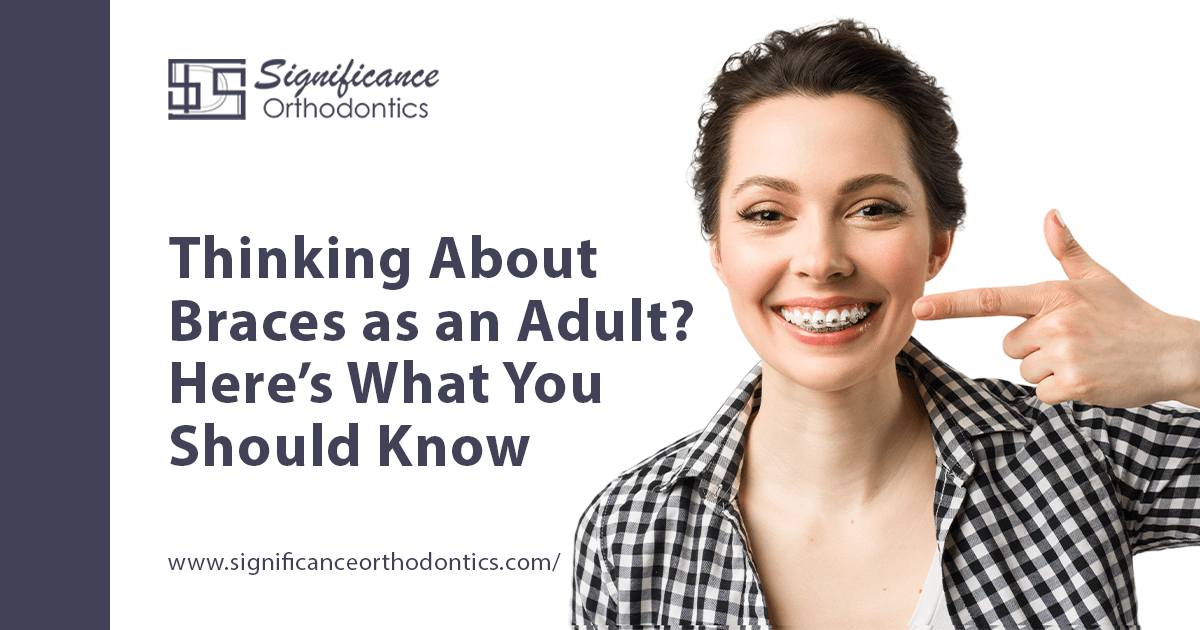
You’re not alone if you’ve ever stared at your reflection and thought, “Maybe it’s finally time to fix my smile.” Whether your teeth shifted after childhood braces, or you never got them in the first place, more adults than ever are choosing orthodontic treatment later in life. And it makes sense, straight teeth aren’t just about looks. They help with everything from your bite to your overall oral health.
At Significance Orthodontics, we see adult patients every single day who want to feel more confident, chew better, or stop clenching from a misaligned bite. If you’re wondering whether it’s worth it, what the process looks like, and what your options are, here’s the real talk, no fluff, no pressure.
Am I too old for adult braces?
The short answer? Absolutely not.
There’s no age limit on wanting to feel good about your smile. Teeth can be safely and effectively moved at any age, as long as your gums and supporting bone are healthy. That’s why we routinely see patients in their 30s, 40s, 50s, and even 60s who decide it’s finally time to address the alignment or bite issues that have bothered them for years.
In fact, adults often make some of the best orthodontic patients. You’re typically more motivated, more consistent with your oral hygiene, and more likely to follow instructions than, say, a teenager who’s counting the days until the braces come off. You know the value of a good investment, especially when it impacts your comfort, your confidence, and your long-term oral health.
Adult orthodontics can help correct a wide range of issues, including:
- Crowding or spacing that developed gradually over time
- Shifting teeth caused by missing teeth or lack of retainers after childhood treatment
- Bite issues like overbites, underbites, or crossbites that affect chewing or cause wear
- Jaw pain or clenching related to misalignment or uneven pressure
- Preparation for cosmetic work like veneers, crowns, or dental implants
And here’s the thing: you don’t need to be chasing a “perfect” Hollywood smile to consider treatment. Maybe your teeth have shifted just enough to make you self-conscious in photos. Maybe your bite feels off, or food keeps getting stuck between teeth that weren’t a problem before. Whatever your reason, if it’s bothering you, it’s valid.
The truth is, more and more adults are choosing orthodontics not because they have to, but because they finally want to. If that’s where you’re at, you’re in good company.
How long does adult orthodontic treatment take?
This is one of the biggest concerns for most adults. You have meetings, social events, maybe even kids of your own, and you don’t want to be in treatment forever.
Here’s the good news: modern orthodontics isn’t what it used to be. Treatment is faster, more comfortable, and more discreet than ever before. The length of time depends on how complex your case is and what option you choose, but here’s a general idea:
- Minor cosmetic straightening: 6 to 12 months
- Moderate alignment/bite correction: 12 to 18 months
- More complex cases: 18 to 24+ months
Some treatment plans can even be accelerated with devices or techniques that stimulate bone remodeling, though these may come at an additional cost.
Another factor is your consistency. Following instructions, wearing your aligners or elastics properly, and showing up to appointments all help you stay on track.
At your first visit to Significance Orthodontics, we’ll take digital scans and photos and map out a clear, personalized plan. You’ll know exactly what to expect before you commit.
Are clear aligners better than braces for adults?
That depends, better in what way?
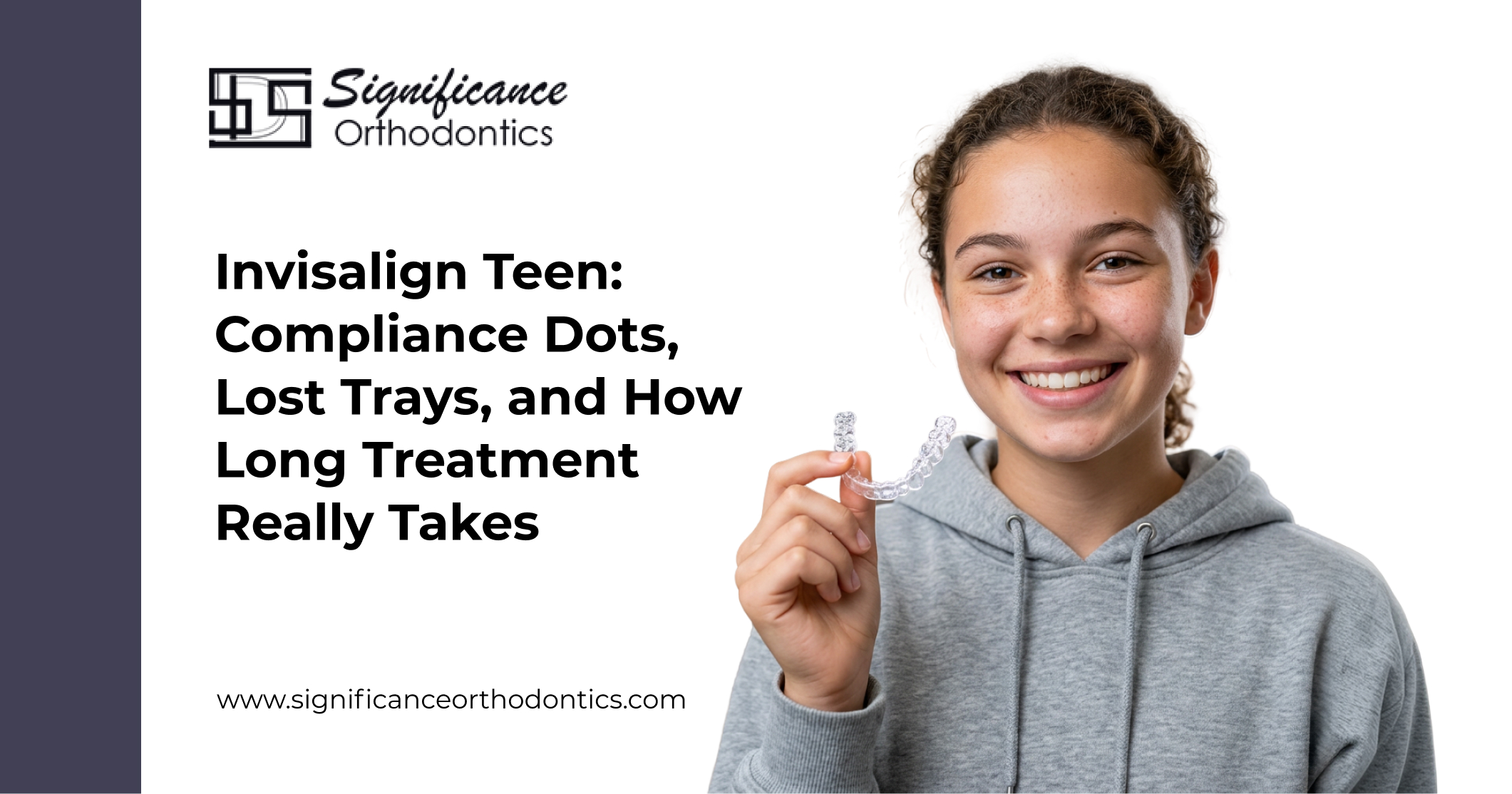
Clear aligners (like Invisalign®) are a popular option for adults because they’re nearly invisible, removable, and easy to live with. You can eat what you want, brush and floss normally, and avoid metal in your mouth. They’re especially great if you speak in public or just don’t want anyone to notice your treatment.
But they’re not always the right choice for every case.
Braces may be more effective in some situations, especially if:
- You have significant bite issues or rotations
- You’re not likely to wear your aligners 22 hours a day
- You prefer not to manage switching trays and keeping them clean
That said, braces today are sleeker and less noticeable than the ones you remember from school. There are also clear ceramic braces that blend in with your teeth.
At your consultation, we’ll help you compare both options honestly, no sales pitch, just the facts. Many adults are surprised to find they have more choices than they expected.
What else should I know before starting?
Here are a few more things worth knowing:
- Treatment isn’t painful, but it can be uncomfortable.
You may feel pressure when you start treatment or switch aligners, but it usually passes within a few days. Most people adapt quickly. - Retainers are forever (well, sort of).
Teeth want to move back. You’ll need to wear retainers after your treatment to keep your results. We’ll walk you through the best options. - Your smile is a long-term investment.
Adult braces isn’t just about vanity. Straighter teeth are easier to clean, which helps prevent gum disease and cavities. A well-aligned bite reduces clenching and TMJ issues. And yes, smiling confidently affects everything from job interviews to dating. - It’s more affordable than you think.
We offer flexible financing options and work with a variety of insurances. Plus, the cost is often less than what you’d spend on cosmetic fixes that don’t last as long. - You’re not the only one doing this.
Millions of adults are currently in orthodontic treatment. You’re part of a growing group of people choosing to feel better and live more confidently.
Let’s talk about your smile
If you’ve been thinking about getting braces as an adult, now’s the time to take the next step. A consultation at Significance Orthodontics is simple, informative, and commitment-free.
We’ll sit down, talk through your concerns, and give you real answers about what treatment could look like for you. You’ll leave with clarity and possibly a lot of excitement.