Orthodontics isn’t just for teenagers anymore. Today, more parents are learning that early evaluations and gentle interventions can set their child up for a lifetime of confident, healthy smiles. At Significance Orthodontics, we work with families every day to create positive experiences and customized treatment plans that fit a child’s needs, not just their teeth.
Whether your child has crowded teeth, a thumb-sucking habit that won’t quit, or a jaw that’s growing unevenly, we’re here to make orthodontics feel less like a medical procedure and more like a natural part of growing up.
Let’s walk through some of the most common questions parents ask us when it comes to orthodontics for kids.
What is the right age for a child’s first orthodontic evaluation?
Most children should have their first orthodontic evaluation by age 7. This recommendation comes from the American Association of Orthodontists and allows us to spot issues early, even before all the permanent teeth have come in.
At this age, we can see how the jaw is developing and whether there’s enough space for the adult teeth to grow in properly. Even if your child doesn’t need braces right away, an early checkup helps us track their growth and intervene at the right time if needed.
For example, if your child’s baby teeth aren’t falling out in the right sequence, or if the jaw appears too narrow, we might use early treatments like expanders or partial braces to guide things into place. This can make future orthodontic care simpler and shorter. In some cases, we can even prevent the need for extractions or surgery down the road.
Early evaluations are gentle, no-pressure visits that give you information — not obligations. We simply assess how things are looking, chat about any habits (like thumb-sucking or tongue-thrusting), and give you a roadmap for what to expect.
How can I tell if my child needs braces or other orthodontic treatment?
The clearest way to know is to schedule a professional consultation, but there are several signs you can watch for as a parent. If your child is over age 7 and showing any of the following, it might be time to check in:
- Crooked, crowded, or overlapping teeth
- Gaps between the teeth
- Early or late loss of baby teeth
- Difficulty chewing or biting
- Mouth breathing or snoring
- Speech challenges like lisps
- Thumb-sucking beyond age 5
- Teeth that stick out or don’t meet evenly
- Jaw shifting, popping, or clicking
You might also notice that your child covers their mouth when they smile or avoids showing their teeth. While every child’s self-esteem develops differently, orthodontics can play a key role in helping kids feel more comfortable and confident.
At Significance Orthodontics, we use digital X-rays and a simple in-office evaluation to assess the position of the teeth and jaw. This helps us determine whether your child needs treatment now, later, or not at all. Every child is different, so we always personalize our recommendations.
What types of orthodontic treatments are best for children?
The best type of treatment depends on your child’s specific needs, but most kids respond well to one of several proven options. Traditional braces are still a reliable and effective choice, especially for complex tooth movements. They’ve come a long way in terms of comfort and appearance — today’s braces are smaller, smoother, and even come with colorful bands that kids love to personalize.
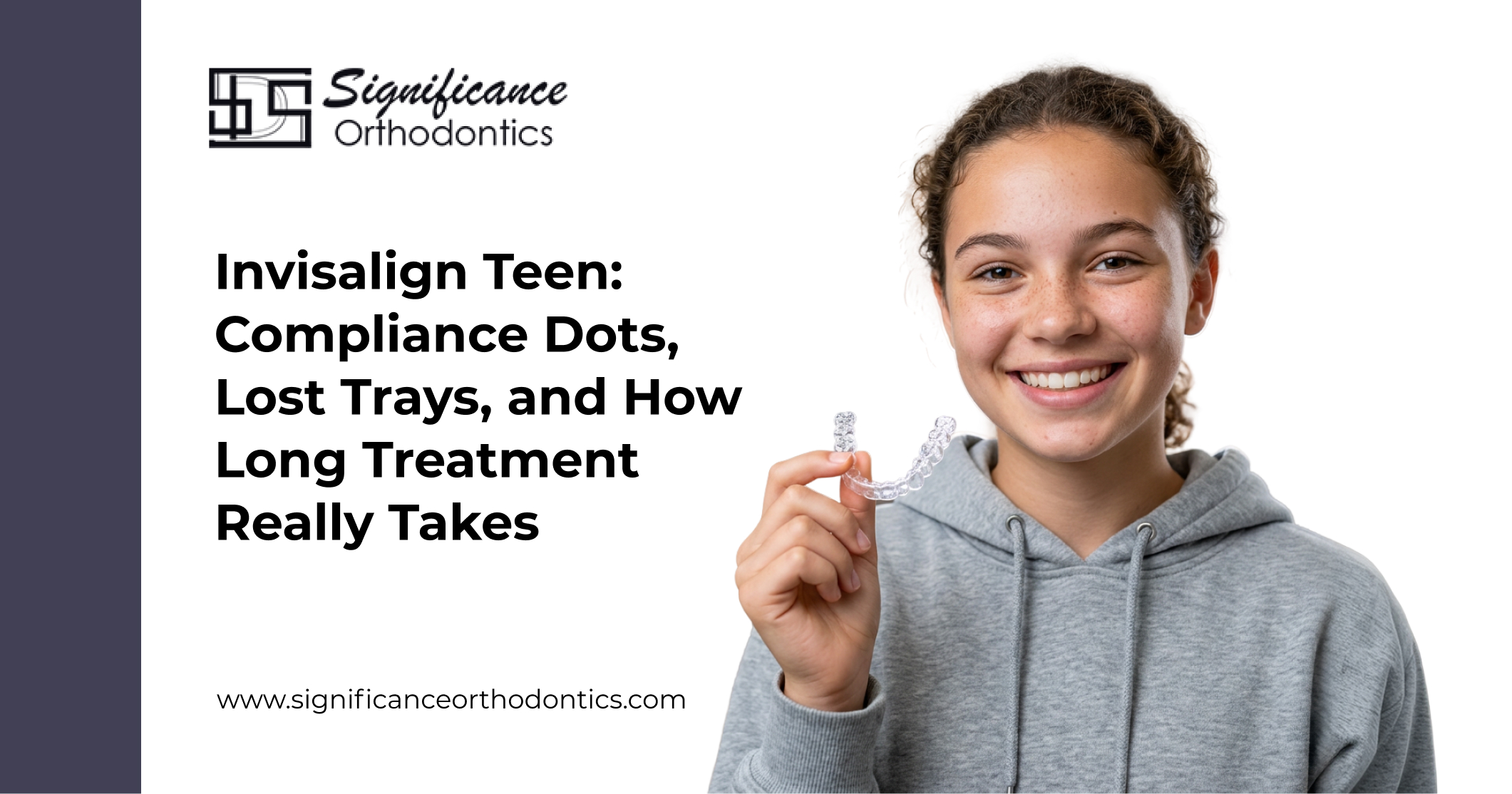
For some kids, clear aligners (like Invisalign First) may be an option. These are removable, nearly invisible trays that gently move the teeth without brackets or wires. Aligners are best for kids who are responsible enough to wear them as instructed and take good care of them.
Other early treatments may include:
- Palatal expanders to widen the upper jaw and create space
- Space maintainers to hold open a gap when a baby tooth is lost early
- Partial braces or interceptive braces for front teeth or mild crowding
- Retainers to help keep improvements in place after early treatment
Some children benefit from a two-phase approach. The first phase, often started around ages 7 to 10, addresses foundational issues like jaw alignment or growth problems. The second phase happens later, usually in the teen years, to refine the bite and final tooth positioning.
The benefit of this phased approach is that it can reduce the need for more aggressive treatments later — like extractions or surgery — and can even shorten the time spent in full braces during the teen years.
Why early orthodontics matters
We don’t just treat teeth. We support your child’s overall growth and development. The mouth is a gateway to more than just a smile; it affects breathing, speaking, sleeping, and even how a child’s face develops over time.
Misaligned teeth can cause more than cosmetic issues. They can lead to jaw pain, uneven tooth wear, speech delays, and even difficulty chewing. Addressing these concerns early doesn’t just save money in the long run. It also makes life easier and more comfortable for your child now.
By working with our team early, you give your child the best possible chance at a healthy, confident future, and you get peace of mind along the way.
What to expect at your first visit
When you bring your child in for their first orthodontic visit at Significance Orthodontics, we’ll start with a conversation. We want to hear about your concerns and observations, and then we’ll do a gentle, thorough exam. We may take digital images or X-rays if needed and explain everything in simple terms.
There’s no pressure to start treatment right away. Sometimes we simply recommend watching and waiting. Other times, we might suggest small interventions that make a big difference.
Either way, you’ll leave with clarity and a plan.
Making treatment fun, not fearful
We know that orthodontic care can sound intimidating to kids — and sometimes to parents too. That’s why we create an environment that’s relaxed, welcoming, and even a little fun. From kid-friendly explanations to rewards for good brushing, we do everything we can to make this a positive experience.
Our goal is to build trust early. We want your child to feel safe, seen, and supported. Whether they need braces now or just a check-in every few months, our team will meet them where they are.
Your child’s future smile starts today
Kids grow fast. Their teeth and jaws are constantly changing, which is why staying proactive matters. Early orthodontic care is about more than straight teeth — it’s about giving your child the foundation for a lifetime of health, function, and confidence.
At Significance Orthodontics, we take the time to get it right. We treat your child like one of our own and design each plan with care.
Ready to learn more? Schedule your child’s orthodontic evaluation today. Whether it’s a first-time visit or a second opinion, we’re here to help. Let’s keep those little smiles growing in all the right ways.