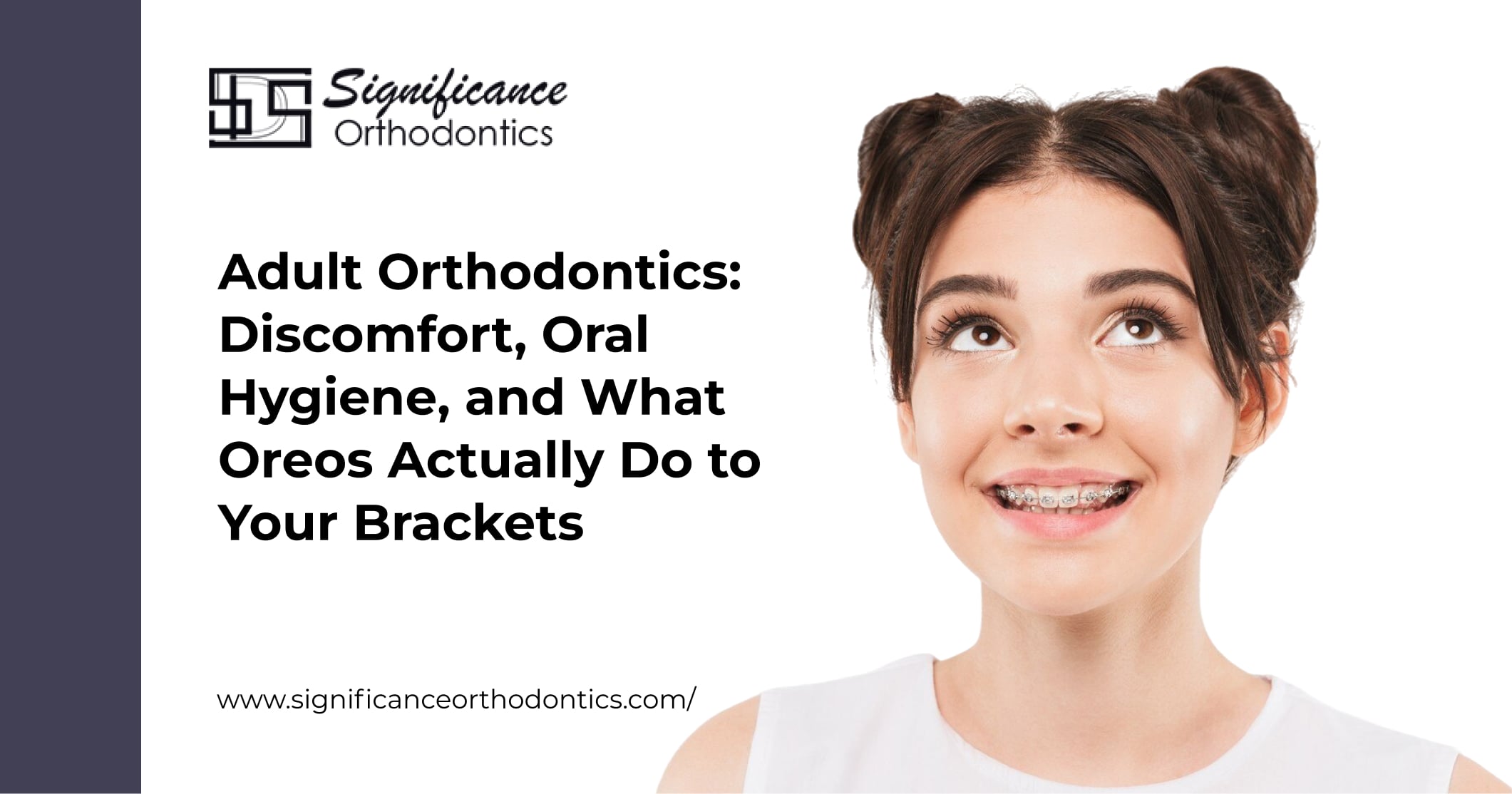
Adult orthodontic treatment does cause discomfort — but the intensity, duration, and triggers are predictable and manageable. Oral hygiene becomes more demanding with braces, especially if you take daily medications that cause dry mouth. And yes, Oreos are a real problem, but not for the reason most people think.
The Dry Mouth Multiplier: Why Adult Discomfort Is Different From Teen Discomfort
Teenagers dominate the orthodontic narrative, but adults represent a growing share of patients. Research published in PMC shows adult orthodontic patients in the U.S. grew by over 27% in just six years, reaching 178 average patients per orthodontist in 2018. What that statistic doesn’t capture is how differently adults experience treatment. If you’re considering adult braces in Las Vegas, understanding these differences is essential before starting treatment.
For teens, discomfort is mostly mechanical — pressure from archwires, soreness after adjustments, and the occasional bracket rubbing against soft tissue. Adults deal with all of that, plus a layer most dental content ignores: medication-induced dry mouth.
A significant portion of adults take daily prescriptions — antidepressants, antihistamines, blood pressure medications — that list dry mouth (xerostomia) as a side effect. Saliva isn’t just about comfort. It neutralizes acid, lubricates soft tissue, and mechanically rinses food away from bracket edges. When saliva production drops, metal brackets shear against unlubricated cheek tissue far more aggressively. According to WebMD, braces continue to work effectively in adults — but the surrounding biology is different.
For patients managing dry mouth, the practical protocol matters. pH-neutralizing dry mouth gels applied before sleep reduce overnight tissue shearing. Xylitol-based lozenges or slow-dissolve mints stimulate salivary flow without the stickiness that traps against brackets. Prescription-strength fluoride toothpaste — such as 5000 ppm fluoride formulas available through your dentist — compensates for reduced salivary enamel protection. These aren’t optional extras. When natural defenses are compromised, they become foundational to getting through treatment without decay or painful ulceration.
The discomfort itself tends to peak in the first 24–72 hours after each adjustment and then recede. A PMC study on orthodontic pain and oral health quality of life confirmed that pain and discomfort are common orthodontic sequelae that affect daily functioning — but are manageable with proper preparation and realistic expectations.
Existing Dental Work: The Discomfort Nobody Warns Adults About
Here’s a gap in nearly every braces guide: most adults seeking orthodontics don’t have a full set of natural enamel. Crowns, veneers, and dental implants are common — and each creates a unique discomfort and hygiene challenge that standard advice doesn’t address.
Crowns and veneers: Bonding brackets to porcelain requires different etching chemistry than bonding to natural enamel. The bond is less reliable, which means brackets on porcelain surfaces can flex slightly under archwire tension, creating a localized pressure sensation that feels different from standard bracket discomfort. Additionally, the margins where a crown meets the gumline are natural food traps. With braces adding brackets and wires nearby, those margins become significantly harder to clean — making gingival inflammation around crowned teeth a common adult complaint.
Dental implants: An implant is anchored directly into bone. It cannot move. During orthodontic treatment, when adjacent teeth shift under archwire force, they press against an immovable implant anchor. This creates a highly localized, intense pressure sensation that’s distinct from generalized orthodontic soreness. Your orthodontist must account for this in the treatment plan — often using the implant as an anchor point rather than trying to move around it.
For hygiene around these restorations, standard interdental brushes can scratch titanium implant surfaces and porcelain crown margins. Plastic-coated interdental brushes protect these surfaces while still clearing the food and biofilm that accumulate at those vulnerable junctions. Oral irrigators on low-pressure settings are particularly effective at flushing crown margins without mechanical abrasion.
Oral Hygiene During Treatment: The Non-Negotiable Basics
Braces create retention surfaces that don’t exist in an unbraced mouth. Brackets, wires, elastomeric ties, and bands all trap food and harbor bacteria. The NIDCR notes that plaque buildup is the primary driver of both tooth decay and gum disease — and that risk compounds significantly when cleaning is mechanically obstructed. Understanding braces and dental health in Las Vegas means recognizing that your hygiene routine must evolve alongside your treatment.
The practical hygiene protocol for adult braces patients:
- Brush after every meal, not just twice daily. Braces don’t give bacteria a schedule.
- Use an orthodontic toothbrush with a V-shaped bristle configuration designed to clean around bracket edges.
- Add interdental brushes (plastic-coated for implant or crown patients) to clear debris from under archwires.
- Floss with a floss threader or water flosser — standard flossing geometry doesn’t work with a fixed archwire blocking access.
- Rinse with fluoride mouthwash at a separate time from brushing to extend enamel protection throughout the day. The ADA Home Care guidelines support antimicrobial rinses for patients at elevated gingivitis risk — a category that includes most fixed orthodontic patients.
Adults with dry mouth should add a dry mouth-specific rinse to this protocol. Alcohol-based mouthwashes worsen xerostomia, so choose alcohol-free formulas specifically. Healthline also recommends staying well hydrated and avoiding alcohol-based rinses to help manage dry mouth and maintain overall oral health.
The Oreo Problem: What Actually Happens Inside Your Brackets
Most braces food guides say “soften your Oreos in milk.” That advice misses the actual mechanical and hygiene problem. For a deeper look at which foods cause the most damage, our guide on the 4 worst candy for braces by North Las Vegas NV orthodontists covers the full picture.
When you bite into an Oreo, the chocolate wafer doesn’t just break — it combines with saliva to form a dark, adhesive paste. This paste has the consistency of wet cement and the color of tar. It wedges under archwires, packs behind elastomeric ties, and fills the slot of each bracket. Brushing immediately after eating pushes this paste deeper into bracket mechanisms rather than removing it.
If you’re going to eat an Oreo, the protocol that actually protects your brackets and your hygiene is this: submerge the cookie in milk for at least 15 seconds. This eliminates the wafer’s shear strength, meaning it dissolves rather than snapping under bite force — the snap is what breaks brackets. After eating, use a warm-water oral irrigator on low pressure before picking up your toothbrush. The irrigator flushes cocoa solids out of bracket slots and from under wires while they’re still loose. Then brush. Brushing first just smears the paste further into the hardware.
This matters beyond cosmetics. Dark, sugar-laden paste sitting against bracket edges creates a localized acid environment. Combined with dry mouth, that’s an accelerated path to white spot lesions — the permanent enamel marks that remain after braces come off. The benefits of metal braces in Las Vegas are significant, but only when the hardware is properly maintained throughout treatment.
Schedule Your Consultation in Las Vegas
Adult orthodontics comes with real challenges — but none of them are reasons to delay treatment. At Significance Orthodontics, we work with adult patients across Las Vegas, Summerlin, Henderson, and North Las Vegas to build treatment plans that account for your full dental history, including existing restorations, medication-related concerns, and lifestyle factors. Whether you’re exploring braces or Invisalign starting at $129, contact us to schedule a new patient exam and get a clear picture of what your treatment would actually involve.
Medical disclaimer: This article is for informational purposes only and does not constitute medical or dental advice. Consult a licensed orthodontist or dentist for diagnosis and treatment recommendations specific to your situation.