If your child’s smile makes you light up inside, but also makes you wonder if something’s a little off, you’re not alone. Crooked teeth, gaps, or bite issues are common among kids, and spotting them early can make a world of difference. Orthodontic treatment isn’t just about straighter teeth; it’s about healthier jaws, clearer speech, easier brushing, and confidence that lasts a lifetime.
At Significance Orthodontics, we help parents and children navigate this phase with clarity and care. Here’s everything you need to know to make confident decisions when it comes to orthodontics for your child.
What age should a child see an orthodontist?
Many parents assume orthodontic treatment starts in the teen years. While that’s often true for braces or aligners, early visits serve a different, and crucial, purpose. The American Association of Orthodontists recommends that kids have their first orthodontic evaluation by age 7. This gives the orthodontist time to identify subtle developmental issues in the jaw or erupting teeth, even if no treatment is immediately needed.
This first evaluation is more like a checkpoint than a commitment. We assess the growth of the jaw and how the baby teeth are falling out. Sometimes, we simply observe the child’s progress through routine follow-ups. But in other cases, we may recommend early interventions, such as space maintainers or gentle appliances, that help steer the bite and jaw growth in the right direction. Starting this process early can reduce or even eliminate the need for complex treatments later on.
Common concerns we watch for at this stage include crowding, crossbites, overbites, underbites, and habits like thumb-sucking. These may affect speech, breathing, and even facial development over time. Parents might not always recognize these signs as orthodontic problems, which is why a professional evaluation is so valuable.
What are the signs my child might need orthodontic care?
Sometimes the signs are subtle, and other times they’re more obvious. Here are some common indicators that your child may benefit from orthodontic evaluation:
- Visible misalignment: Teeth that appear crooked, crowded, or spaced too far apart—even in early stages.
- Bite issues: Overbite, underbite, crossbite, or open bite can cause jaw discomfort, difficulty chewing, and uneven wear on teeth.
- Mouth breathing: Regularly breathing through the mouth instead of the nose, especially during sleep, may indicate airway or jaw development concerns.
- Difficulty biting or chewing: Struggling with food or avoiding certain textures may suggest misalignment or bite dysfunction.
- Speech concerns: Trouble pronouncing certain sounds or ongoing speech delays can sometimes be linked to the position of the teeth or jaws.
- Jaw shifting or popping: Noticeable clicking, popping, or shifting of the jaw while talking or eating.
- Facial asymmetry: A visibly uneven smile, misaligned chin, or changes in facial balance may reflect underlying skeletal issues.
- Behavioral habits: Thumb-sucking, tongue-thrusting, and prolonged pacifier use beyond age 3 can lead to open bites or protruding front teeth.
- Snoring or sleep issues: Sleep-disordered breathing may be connected to how the jaws and teeth are developing.
- Early or late loss of baby teeth: Losing baby teeth too early or too late can affect how adult teeth emerge and align.
Not all kids need immediate treatment, but early evaluations allow orthodontists to monitor development and intervene at the right time if needed. In some cases, we use interceptive orthodontics; short-term, targeted treatments such as:
- Palatal expanders
- Space maintainers
- Partial braces
- Habit-breaking appliances
These are most effective while the jaw is still growing and can help reduce the need for more intensive treatment later on.
Some children won’t require orthodontic care until their teen years. But with regular dental visits and early orthodontic checkups, you can stay one step ahead of potential problems—and give your child the healthiest, most confident smile possible.
How long does treatment usually take, and what are the options?
Orthodontic treatment timelines vary based on age, severity, and the type of appliance used. Some children who start with early intervention may only need a few months of treatment, followed by a rest phase before moving on to full braces later. Others might begin treatment as pre-teens and wear braces or aligners for 18 to 24 months.
At Significance Orthodontics, we offer a range of options tailored to your child’s unique needs:
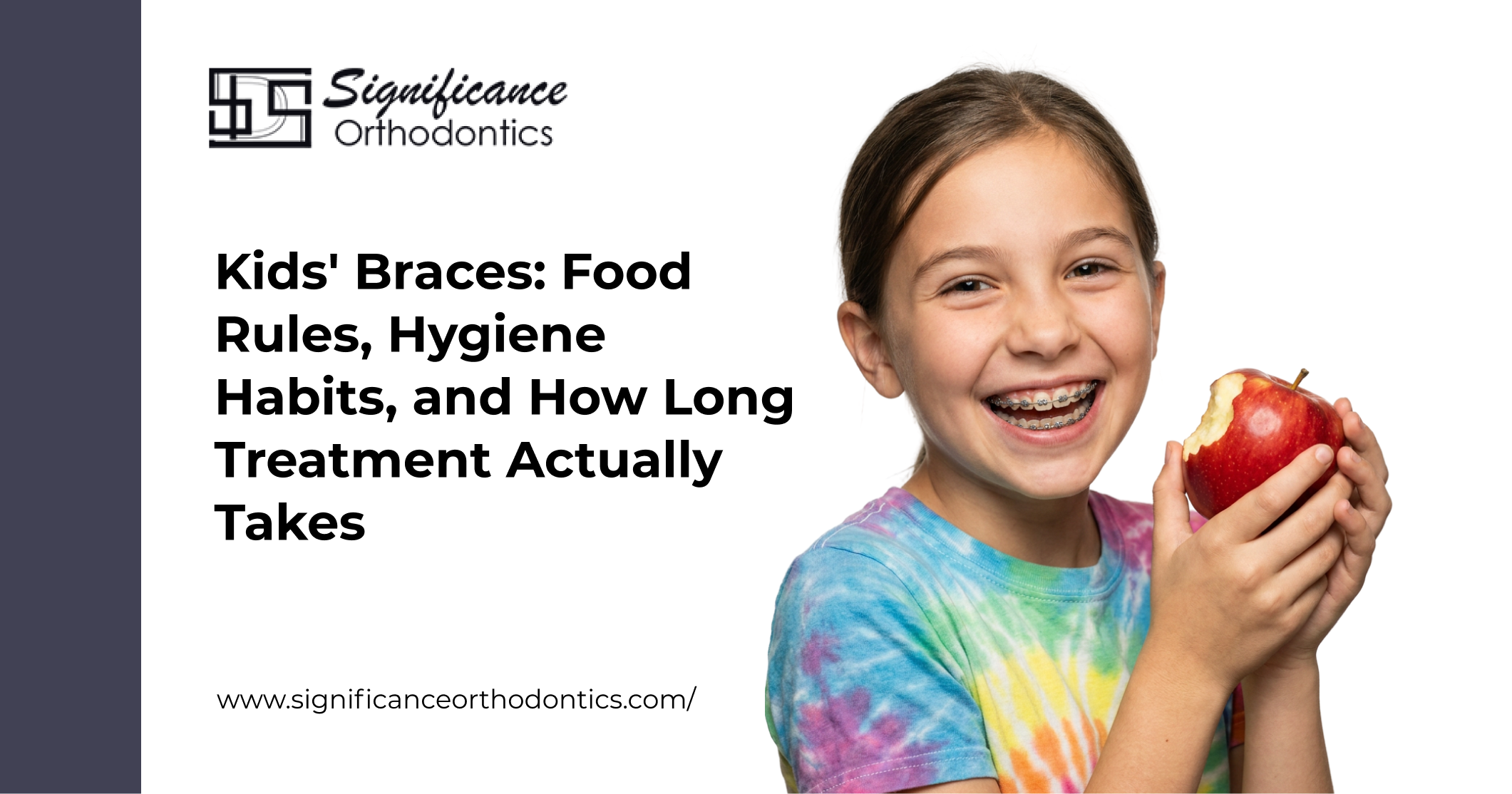
Traditional metal braces remain the go-to for many kids, especially when correcting more complex issues. They are reliable, effective, and even customizable with fun color bands that kids enjoy changing at each visit.
Clear ceramic braces are similar but blend more naturally with the teeth. They work well for kids who want a more discreet look while still needing the strength of a fixed appliance.
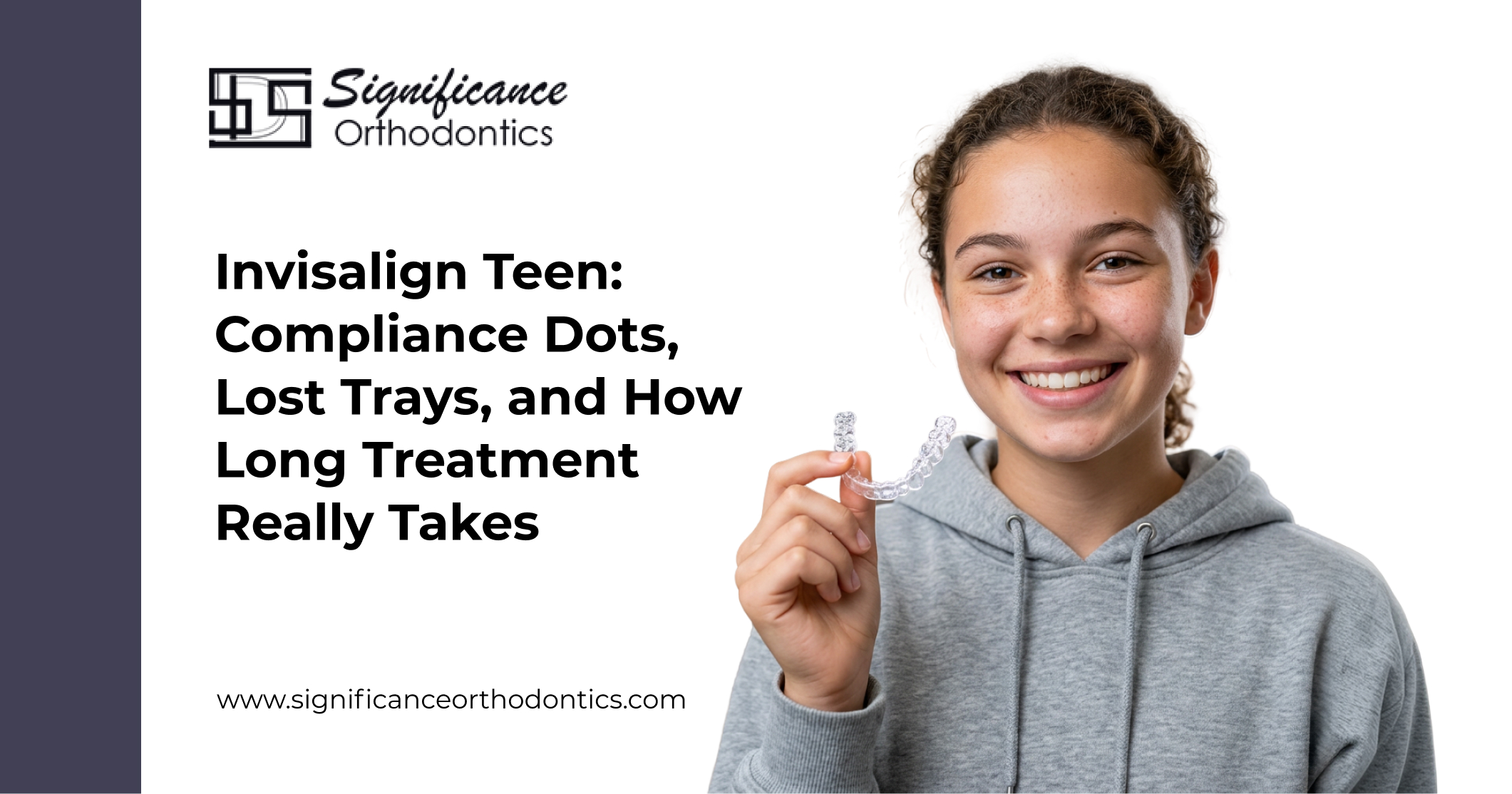
Clear aligners like Invisalign First are growing in popularity for older children and pre-teens. They are nearly invisible and removable, which helps with hygiene and diet. However, aligners require discipline; kids need to wear them 20 to 22 hours a day for effective results.
Other appliances, like palatal expanders or space maintainers, can help prepare the mouth for incoming adult teeth or address specific jaw issues before braces are even considered.
No matter which path your child is on, we make sure it’s clearly mapped out, easy to follow, and built around your family’s schedule. We also take time to educate both you and your child so they feel empowered and confident through every step.
Orthodontics for kids is about more than just straight teeth. It’s about helping children grow into their healthiest, happiest selves. And that starts with understanding their needs early and partnering with a team who genuinely cares.