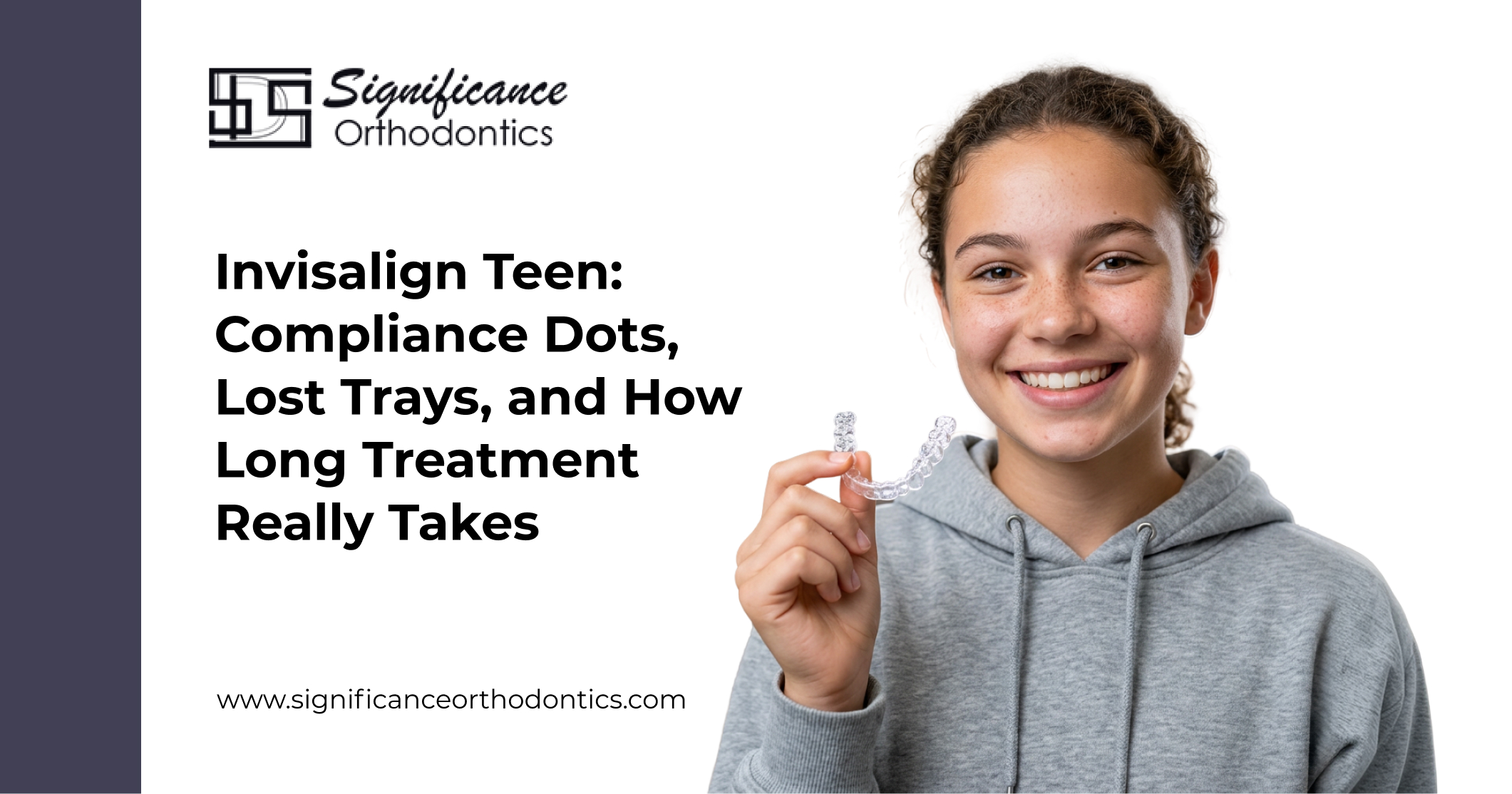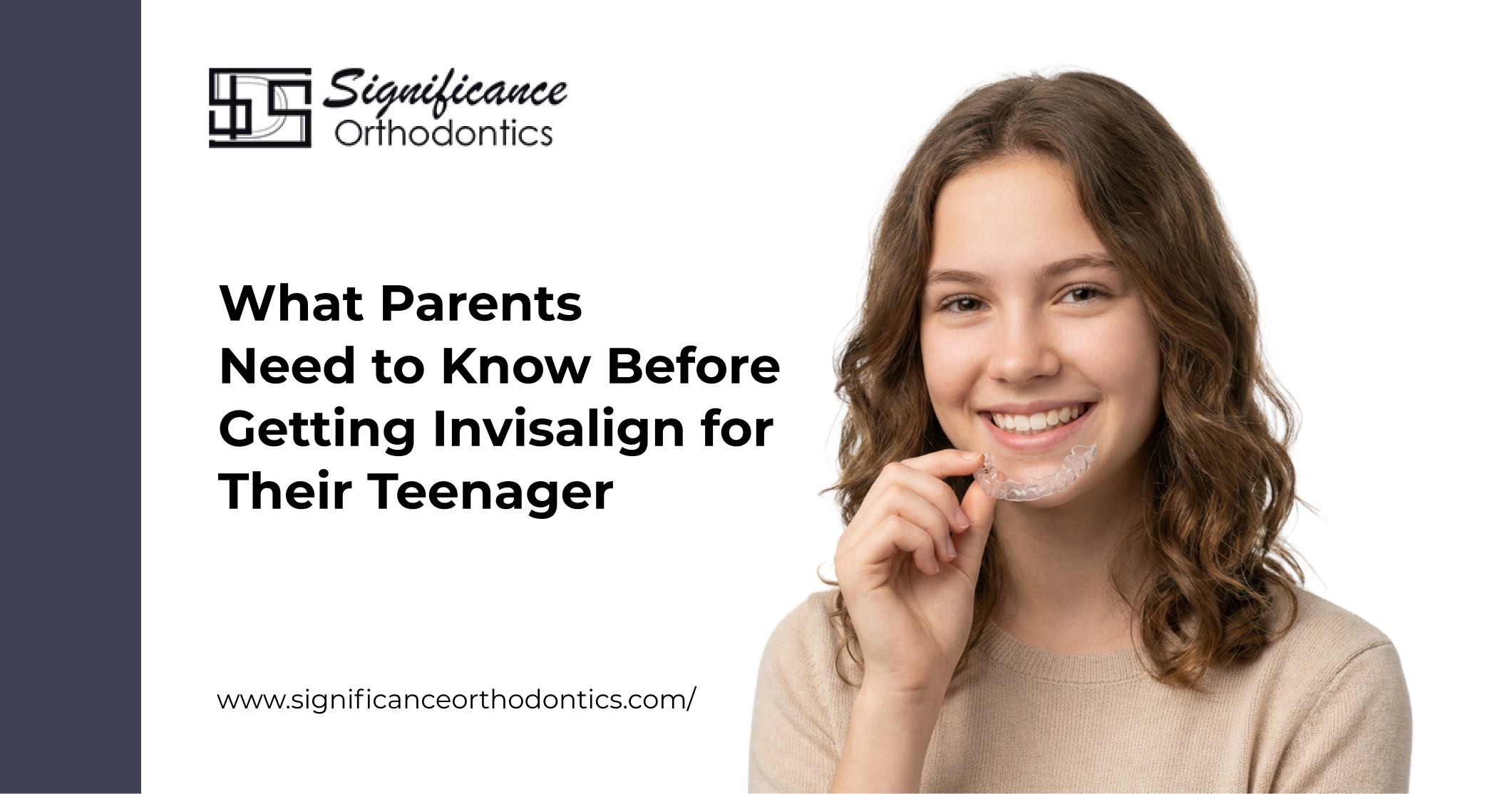
Teen Invisalign works — but only when teens actually wear the aligners for 22 hours a day, protect their attachments from staining foods, and manage the real-world schedule conflicts that come with sports and school lunches. Here’s what the brochure doesn’t cover.
The 22-Hour Rule Has Hidden Enemies: Sports, Instruments, and the School Bell
Most parents hear “22 hours a day” and assume that’s easy. It isn’t — not for an active teenager.
According to Cleveland Clinic, clear aligners must be removed only for eating, drinking, and brushing. That sounds straightforward until your teen plays lacrosse, football, or trumpet. If you’re still weighing your options, our guide to braces and Invisalign in Las Vegas covers how both treatments handle active teen lifestyles.
Contact sport athletes cannot safely wear standard athletic mouthguards over Invisalign aligners. The solution isn’t to skip the mouthguard — it’s to ask your orthodontist about a custom mouthguard designed to fit over the aligner trays. This protects the teeth without sacrificing wear time.
Wind and brass musicians face a different challenge. Playing clarinet, flute, or trumpet with plastic trays changes embouchure — the precise lip and mouth position musicians depend on. Rather than removing aligners at every rehearsal, many players adapt by practicing short sessions with aligners in, gradually retraining their embouchure. The key is to calculate total removal time honestly. Two hours of band practice plus a 30-minute game-day removal can quietly push a teen under the daily threshold.
On school days, the math matters. If your teen removes aligners at 7:00 a.m. for breakfast and doesn’t reinsert until 7:45 a.m., then removes them again at lunch, after school snack, and dinner — those windows compound fast. WebMD notes that failing to wear aligners consistently extends total treatment time. Build a phone alarm system with your teen to track removal windows in real time.
The School Lunch Problem No One Talks About
Standard Invisalign guidance is clear: brush and floss after every meal before reinserting aligners. That protocol assumes a private bathroom, five minutes, and zero social pressure. School lunch offers none of those things.
Here’s the realistic survival protocol for teens navigating a 25-minute lunch period:
Option 1 — The Waterless Approach. Keep a pack of Colgate Wisp disposable mini-brushes in a locker or backpack. These require no water or rinsing and can be used discreetly. After eating, a quick wipe of each tooth surface before reinserting aligners removes the majority of food debris.
Option 2 — The High-Pressure Swish. When a sink is accessible but brushing isn’t practical, a vigorous 30-second water swish — think mouthwash-level intensity — dislodges most food particles from tooth surfaces. It isn’t a substitute for brushing, but it dramatically reduces the sugar and bacteria trapped against teeth.
The non-negotiable rule: Never reinsert aligners directly over food particles. Trapping sugars against teeth for hours creates ideal conditions for decay, as Mouth Healthy from the ADA warns — misaligned or poorly cleaned teeth face elevated risk of cavities and gum disease. That risk multiplies when aligners seal food against the enamel. Understanding braces and dental health in Las Vegas can help parents and teens build better daily hygiene habits throughout treatment.
If your teen genuinely cannot clean their teeth at school lunch, they should keep the aligners out, eat, and reinsert immediately after school with a proper brushing session — logging that removal window so they can compensate with overnight wear.
Attachment Staining: The Problem That Outlasts the Trays
Here’s what most Invisalign guides skip entirely: the composite “attachments.”
Attachments are small tooth-colored bumps bonded directly onto the teeth. They give the aligner trays something to grip, allowing more precise tooth movement. Unlike the plastic trays — which are swapped out every one to two weeks — these attachments stay on the teeth for the entire treatment duration. And they stain.
Highly pigmented foods popular with teenagers are the biggest culprits. Takis, Cheetos, iced coffee, sports drinks with artificial dye, and dark sodas all carry pigments that absorb into the porous composite material. Healthline’s overview of Invisalign care emphasizes that bacteria and debris build up on oral appliances quickly — and the same principle applies to the attachments bonded to the teeth themselves.
High-risk attachment staining foods to watch:
- Artificially dyed chips and snacks (orange and red dyes are particularly aggressive)
- Sports drinks in blue, red, and purple
- Iced coffee and cold brew
- Tomato-based sauces eaten without immediate brushing afterward
The cleaning protocol for attachments is different from cleaning the trays. Use an electric toothbrush angled at 45 degrees to scrub around each composite bump — the oscillating head reaches the margins where pigment accumulates. A whitening mouthwash (alcohol-free) used once daily can slow staining without damaging the composite. Avoid whitening toothpastes with heavy abrasives, which can erode the attachment surface.
Tray staining is cosmetic and temporary. Attachment staining is visible for months. Make sure your teen understands the difference before they crack open a sports drink. For a broader look at how staining and food restrictions compare between treatment types, see our breakdown of clear braces vs. metal — which option is right for you.
Can Teens Eat Whatever They Want? (Almost — With Conditions)
This is one of Invisalign’s genuine advantages over traditional braces. Healthline’s review of Invisalign effectiveness confirms that aligners are fully removable for meals, which means no broken brackets from hard foods and no wires catching on sticky candy.
In theory, your teen can eat anything. In practice, two conditions apply.
First, every meal requires aligner removal and post-meal cleaning before reinsertion. The freedom to eat anything is only as good as the teen’s willingness to clean consistently afterward.
Second, beverages are trickier. Water is the only drink safe to consume while wearing aligners. Any other drink — even “sugar-free” flavored water with citric acid — can seep under the trays and pool against the enamel. Hot drinks warp the plastic. Teens who sip iced coffee throughout the morning while wearing aligners are essentially bathing their teeth in pigment and acid for hours.
The practical rule: aligners out for anything that isn’t plain water. Reinsertion happens only after brushing. It’s a simple protocol, but it requires consistent habit-building — which is where parental check-ins during the first few months genuinely matter. Families exploring cost-effective ways to start treatment can also review braces or Invisalign starting at $129 to understand what affordable options look like.
Ready to Start? Talk to an Orthodontist in Las Vegas First
Every teenager’s case is different, and the right treatment plan depends on factors that no blog post can assess. At Significance Orthodontics, our team works with teens and families across the Las Vegas Valley — including Summerlin, Henderson, and North Las Vegas — to build realistic treatment plans that fit actual teenage schedules. Learn more about affordable braces for teens and schedule a new patient exam to get a clear picture of what Invisalign for your teen would actually look like.
Medical disclaimer: This article is for informational purposes only and does not constitute medical or dental advice. Always consult a licensed orthodontist for diagnosis and treatment recommendations specific to your child’s needs.