If you’ve ever looked at your child’s teeth and thought, “These are getting crowded already,” you’re not imagining it. A lot can happen between ages 6 and 10: baby teeth loosen, adult teeth start coming in, and jaws are still actively growing. That’s why early orthodontic care exists, not to chase perfection too soon, but to guide growth and create healthier space for what’s coming next.
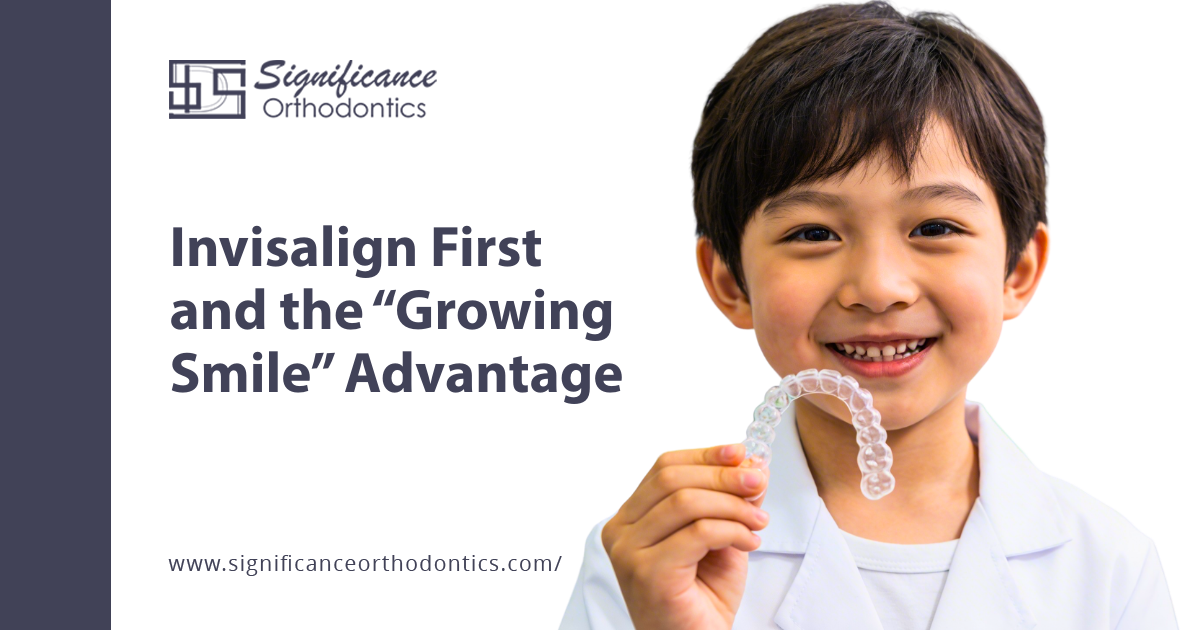
Invisalign First is designed specifically for this stage. It’s an early orthodontic option that uses clear aligners to help shape developing smiles while your child still has some baby teeth. For the right child, it can make later treatment simpler and help avoid certain problems from getting worse over time.
In this post, we’ll break down how Invisalign First works, who it tends to help most, and what real life situations (like crowding with baby teeth or losing a tooth early) actually look like in treatment.
At what age is Invisalign First most effective, and how do you know a child is ready?
Invisalign First is generally designed for children in the mixed dentition stage, meaning they have a blend of baby teeth and adult teeth. This often falls around ages 6 to 10, but age alone is not the real deciding factor.
A child is usually “ready” when these pieces line up:
- They’re in mixed dentition, with some adult teeth already in place.
- They can follow routines, like wearing aligners and keeping them safe.
- They can manage simple responsibility, with parent support.
- Their orthodontic issue benefits from early intervention, like crowding, spacing, or certain bite patterns.
Signs your child may be a good Invisalign First candidate:
- Adult teeth are coming in noticeably crowded or rotated.
- Your child can’t comfortably floss between certain teeth because space is tight.
- You notice the bite looks “off,” like teeth not meeting evenly.
- You’ve been told there may not be enough room for incoming teeth.
How we confirm readiness at Significance Orthodontics:
We don’t guess. We evaluate eruption timing, growth patterns, and space, then talk honestly about whether Invisalign First is likely to help now or whether waiting makes more sense.
Can Invisalign First help with crowding when a child still has baby teeth, or do you have to wait for adult teeth?
Crowding is one of the most common reasons parents ask about Invisalign First, and yes, it can often help even when a child still has baby teeth.
Here’s why: crowding isn’t only about the teeth you see today. It’s often about space management for the teeth you haven’t seen yet. If we can guide teeth and arches while the jaw is still developing, we can sometimes reduce the “traffic jam” effect as more adult teeth erupt.
That said, Invisalign First is not an automatic yes for every crowded smile. It depends on:
- How severe the crowding is
- Which adult teeth are present already
- Whether there is a jaw width or bite component
- How your child is growing
A realistic expectation to keep in mind:
Invisalign First may improve crowding and create better spacing, but your child may still need additional orthodontic treatment later once all adult teeth are in. Early treatment is often about making the later stage easier and more predictable, not guaranteeing that there will never be a second phase.
Ways Invisalign First may support crowded mixed dentition:
- Aligning teeth that have erupted into tight spaces
- Creating better arch form so incoming teeth have room
- Reducing overlap that makes brushing difficult
- Supporting healthier bite alignment while growth is active
If your child’s teeth are crowding early, it’s worth checking now rather than waiting until it becomes uncomfortable or harder to manage.
What happens if a child loses a baby tooth early while using Invisalign First?
Baby teeth do not always follow the schedule. Sometimes a child loses one early from a bump, decay, or simply because it was ready sooner than expected. Parents often worry that losing a tooth early will “ruin the aligners.”
In most cases, it doesn’t. It just means we adapt.
If a baby tooth is lost early during Invisalign First, we may:
- Continue as planned if the aligner still fits well and the change is minor.
- Modify the aligner plan if a new gap changes how the aligner grips.
- Rescan or adjust staging if multiple changes happen quickly.
- Monitor eruption of the adult tooth closely so it comes in cleanly.
The key is that Invisalign First is built for a changing mouth. The treatment plan can be updated when things shift, and that’s normal in early orthodontics.
What you should do if your child loses a tooth while in aligners:
- Keep the aligners in, unless they suddenly feel sharp or unstable.
- Store the lost tooth if you’re unsure whether it was baby or adult.
- Let our office know so we can advise you on next steps.
- Don’t try to “fix the fit” at home with trimming or bending.
At Significance Orthodontics, we plan for the reality that kids grow and teeth change. Early tooth loss is a common scenario, and we handle it with calm adjustments, not panic.
How to help Invisalign First go smoothly at home
The success of Invisalign First is a team effort. The aligners do the work, but consistency makes the difference.
Helpful habits that make a big impact:
- Create an aligner home (a consistent case spot) so they don’t get lost.
- Use meal routines: aligners out for eating, back in right after brushing.
- Do a quick nightly check: clean aligners, brush well, confirm they’re seated.
- Praise consistency instead of only focusing on perfect teeth.
Common pitfalls to avoid:
- Wrapping aligners in a napkin (that’s how they disappear).
- Drinking sugary drinks with aligners in.
- Skipping wear time on weekends or sleepovers.
If you’re wondering whether your child will realistically wear aligners, that’s a fair question. We’ll talk through it honestly at the consultation. Some kids thrive with Invisalign First. Others do better with a different approach.
A simple next step if you’re unsure
If you’re noticing crowding, bite changes, or teeth erupting in odd positions, you don’t have to wait until “all the adult teeth are in.” That’s often when problems have already had time to settle in.
A consultation can clarify:
- Whether Invisalign First is appropriate now
- What your child’s growth pattern suggests
- Whether early treatment could prevent bigger issues later
- What a realistic treatment path looks like for your child
Ready to find out if Invisalign First is a fit?
Schedule an orthodontic consultation with Significance Orthodontics. We’ll evaluate your child’s smile, explain the options clearly, and help you choose the path that makes the most sense, not just the earliest one.