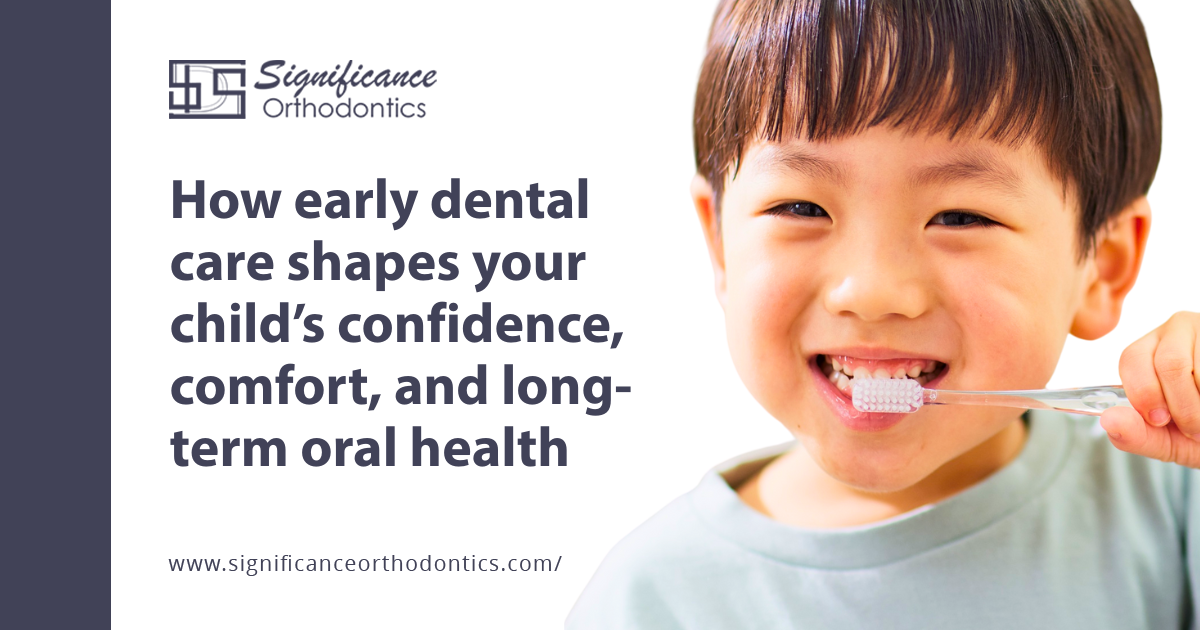
Healthy dental development in children does not happen by chance. It is shaped gradually through consistent care, early observation, and thoughtful guidance long before permanent teeth appear or orthodontic treatment is discussed. From baby teeth to jaw growth and bite alignment, early dental care influences how a child eats, speaks, breathes, and feels about their smile as they grow.
Many parents assume orthodontics only becomes relevant during the teenage years. In reality, dental development in children is a continuous process that begins in early childhood. Early dental care can influence jaw growth, spacing, crowding, and how easily future orthodontic treatment works if it becomes necessary. The goal is not early braces for every child. The goal is awareness, prevention, and support at the right developmental stages.
At Significance Orthodontics, we believe healthy dental development in children starts early and supports long-term comfort, function, and confidence.
Why Early Dental Development in Children Matters More Than Parents Realize
A child’s mouth is constantly changing. Teeth erupt, jaws grow, habits form, and muscles learn patterns. Each stage of dental development builds on the one before it.
Early dental development in children affects:
- How teeth fit together as the bite develops
- How the jaw grows and aligns
- Whether permanent teeth have enough space to erupt properly
- How smoothly orthodontic treatment can work later
- A child’s comfort, confidence, and oral health habits
Ignoring early signs does not always lead to problems, but paying attention early often helps prevent complex dental and orthodontic issues later on.
How Baby Teeth Support Healthy Dental Development in Children
Baby teeth play a critical role in healthy dental development. They are not temporary placeholders with no long-term impact.
Primary teeth help:
- Hold space for permanent teeth
- Support proper chewing and nutrition
- Aid in speech development
- Guide jaw growth and bite alignment
When baby teeth are lost too early due to decay or injury, nearby teeth can shift into the empty space. This can reduce room for adult teeth and increase the risk of crowding, misalignment, or bite problems as children grow.
What Parents Can Do Early to Support Dental Development in Children
Early dental care begins at home and is reinforced through regular professional visits. Small habits in the early years can strongly influence long-term dental development.
1. Start Dental Visits Early to Support Healthy Development
Children should visit a dentist by their first birthday or within six months of the first tooth erupting. These early appointments focus on prevention, education, and monitoring dental development.
Regular visits help:
- Track how teeth and jaws are developing
- Identify habits that may affect alignment
- Build comfort and confidence around dental care
Children who grow up with consistent dental visits often carry healthier oral habits into adulthood.
2. Build Daily Habits That Protect Dental Development
Consistency matters more than perfection when it comes to oral care at home.
Key habits that support healthy dental development in children include:
- Brushing twice daily with age-appropriate toothpaste
- Flossing once teeth begin to touch
- Limiting frequent sugary snacks and drinks
- Encouraging water instead of juice or soda
These routines protect baby teeth and help maintain a strong foundation for permanent teeth.
3. Watch for Habits That Affect Jaw and Tooth Development
Certain childhood habits can influence how the jaw and teeth develop over time.
Parents should watch for:
- Thumb or finger sucking beyond early childhood
- Prolonged pacifier use
- Mouth breathing
- Tongue thrusting during swallowing
These habits do not always cause issues, but when they persist, they can affect bite alignment and jaw growth. Early guidance can help reduce the risk of more complex orthodontic concerns later.
Are Baby Teeth Important for Long-Term Dental Development in Children?
Yes. Baby teeth guide the entire roadmap of dental development in children. When they remain healthy and are lost at the appropriate time, permanent teeth are more likely to erupt into better positions.
When baby teeth are lost too early:
- Neighboring teeth may shift
- Space for adult teeth can be reduced
- Crowding or misalignment becomes more likely
Protecting baby teeth supports smoother dental transitions as children grow.
How Dental Development in Children Affects Orthodontic Outcomes
Orthodontic care works best when it aligns with natural growth. This is why monitoring dental development early is so valuable.
Orthodontics focuses on more than straight teeth. It supports:
- Balanced jaw growth
- Functional bite alignment
- Comfortable chewing and speaking
- Long-term stability of results
Early evaluations allow orthodontists to identify growth patterns and concerns before they become more difficult to manage.
How Early Orthodontic Awareness Supports Healthy Dental Development
Early orthodontic care is about timing, not rushing treatment. Many children benefit simply from monitoring and guidance rather than immediate intervention.
Potential benefits include:
- Creating space for incoming permanent teeth
- Guiding jaw growth during key developmental stages
- Reducing the length or complexity of future orthodontic treatment
- Supporting bite function early
Even when treatment is not needed, early awareness gives parents clarity and peace of mind.
Long-Term Benefits of Supporting Dental Development in Children Early
Children who receive consistent dental and orthodontic care often experience smoother transitions into adolescence and adulthood.
Long-term benefits may include:
- More stable tooth alignment
- Reduced risk of excessive tooth wear
- Easier oral hygiene due to better spacing
- Greater confidence in their smile
Healthy dental development is not about perfection. It is about balance, function, and long-term comfort.
How Parents Can Stay Proactive About Dental Development as Children Grow
As children move into school years and adolescence, dental needs evolve. Staying proactive means adjusting care as development continues.
Helpful steps include:
- Maintaining regular dental visits
- Scheduling orthodontic evaluations when recommended
- Encouraging consistent brushing and flossing habits
- Addressing concerns early instead of waiting
Dental development is a long process, and small actions make a meaningful difference over time.
Why Orthodontics Supports Dental Health, Not Just Appearance
Straight teeth are a visible benefit, but the real value of orthodontics lies in function and comfort.
Proper alignment can:
- Make brushing and flossing easier
- Reduce stress on jaw joints
- Improve bite efficiency
- Support long-term oral health
Orthodontic care is an investment in how the mouth functions, not just how it looks.
Supporting Healthy Dental Development in Children Is a Long-Term Journey
Every child develops differently. There is no single timeline that fits everyone. What matters most is having a trusted dental and orthodontic team to guide you through each stage with clarity and care.
At Significance Orthodontics, we focus on supporting healthy dental development in children from early childhood through long-term outcomes. Whether your child is just beginning dental visits or approaching their first orthodontic evaluation, our team is here to help you make informed, confident decisions.
If you have questions about your child’s dental development or would like to schedule an orthodontic evaluation, contact Significance Orthodontics today. A healthy smile starts with the right support at the right time.